What the Steelyard TIF Grant Is and What It Has Funded in Old Brooklyn
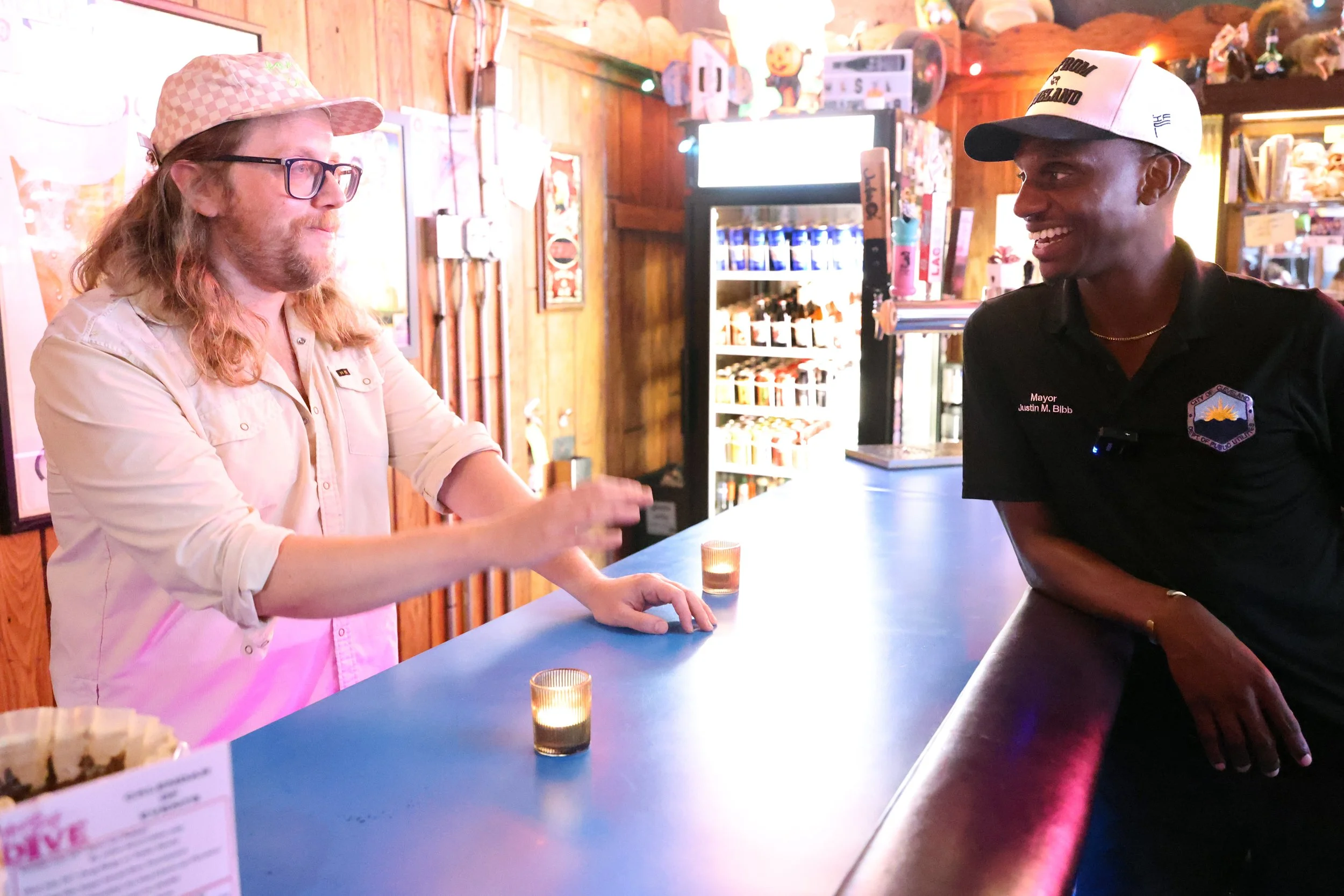
Mayor Bibb at Never Say Dive
The short version: Over $220,800 in Steelyard TIF money has gone to Old Brooklyn businesses and public spaces since its 2025 relaunch. The fund exists because a 2006 study found Steelyard Commons hurt retail in six nearby neighborhoods: Ohio City, Tremont, Clark-Fulton, Old Brooklyn, Slavic Village and Lorain Station, and only those six qualify for the grant program. It pays for storefront and streetscape upgrades like signage, lighting, landscaping, equipment and murals, not staffing or rent. Each neighborhood has its own pot, so a strong application can still lose out if its neighborhood's funds are low that round. The next application window is announced on the City's website, and Old Brooklyn CDC can help with the application and paperwork.
Here's how it works, and who's gotten it so far.
Where the money comes from
Tax increment financing (TIF) lets a city capture the new property value created by a development and direct it toward public purposes. This isn't a new tax, it's money set aside from Steelyard Commons' own increased property value. Cleveland's Steelyard Commons TIF was created in 2006 to fund infrastructure for the Towpath Trail and Canal Basin Park.
In 2011, the City amended that arrangement. A 2006 study by MJB Consulting had found that Steelyard Commons hurt retail business in six nearby commercial districts. In response, Council voted to send 30 percent of the fund to grants for those six neighborhoods, so the businesses affected by the big-box retail could be supported directly: Ohio City, Tremont, Clark-Fulton, Old Brooklyn, Slavic Village and Lorain Station. The other 70 percent stayed with the trail and park work.
That's why the Steelyard name is misleading, it describes where the money comes from, not where it has to be spent. The name is tied to the shopping center; eligibility is tied to the neighborhoods the 2006 study found were harmed by it.
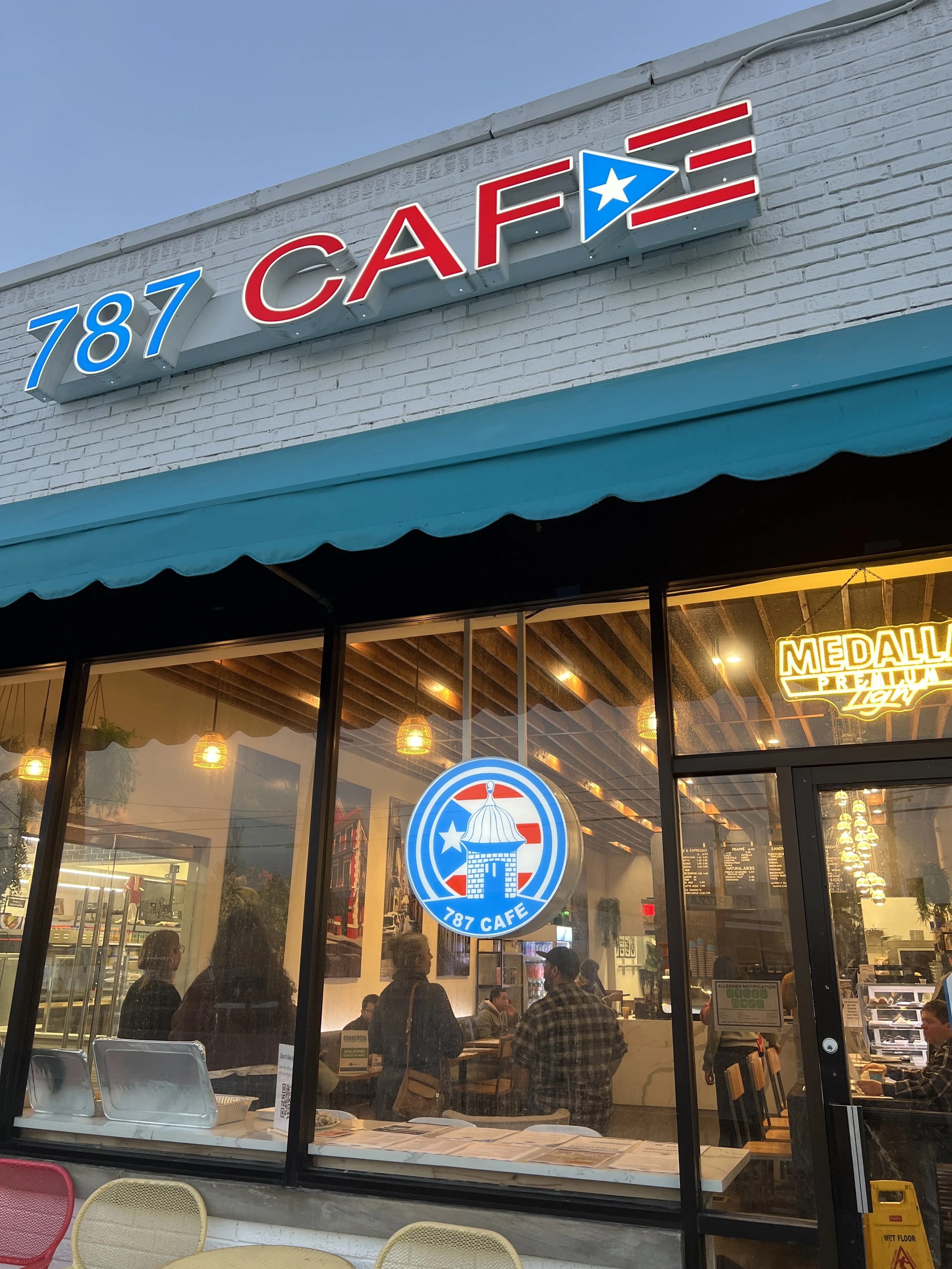
787 Market & Cafe
Two grants, and what they pay for
Small Business Grants run $5,000–$10,000 for established and start-up retail businesses, storefront and streetscape work like interior and exterior improvements, signage, lighting, landscaping, bike racks, fencing, design costs, and furniture, fixtures and equipment.
Placemaking Grants are capped at $15,000 today and fund public-space projects: murals, public art, parklets, street trees, benches, streetscape work, lighting, events. Both nonprofits and for-profits can apply. Old Brooklyn CDC's $100,000 award, below, was made under an earlier, higher cap before the program was revised. A placemaking project applying today would be limited to $15,000.
Both types of grants require the applicant to cover at least 10 percent of the project cost themselves. Neither can be used for staffing, operations or environmental remediation. And neither is a check up front: money is reimbursed as work is completed, against invoices, and awarded projects are expected to wrap up within two years of the contract being signed.
Why each neighborhood's balance is different
The fund gets two deposits a year, split equally across the six neighborhoods. But equal deposits don't stay equal, each neighborhood draws down its share at its own pace, depending on how many businesses apply and how big their projects are. The more projects a neighborhood funds, the faster its balance shrinks.
Going into the most recent round, per the City's current FAQ:
Neighborhood & Approximate starting balance
Ohio City - $42,796
Tremont - $57,006
Clark-Fulton - $57,955
Old Brooklyn - $81,815
Slavic Village - $142,640
Lorain Station - $132,812
Demand varies just as much. This past cycle, Ohio City drew roughly 18 applications, the most of any neighborhood, and split its balance among the eight strongest. Clark-Fulton drew three, two of them eligible.
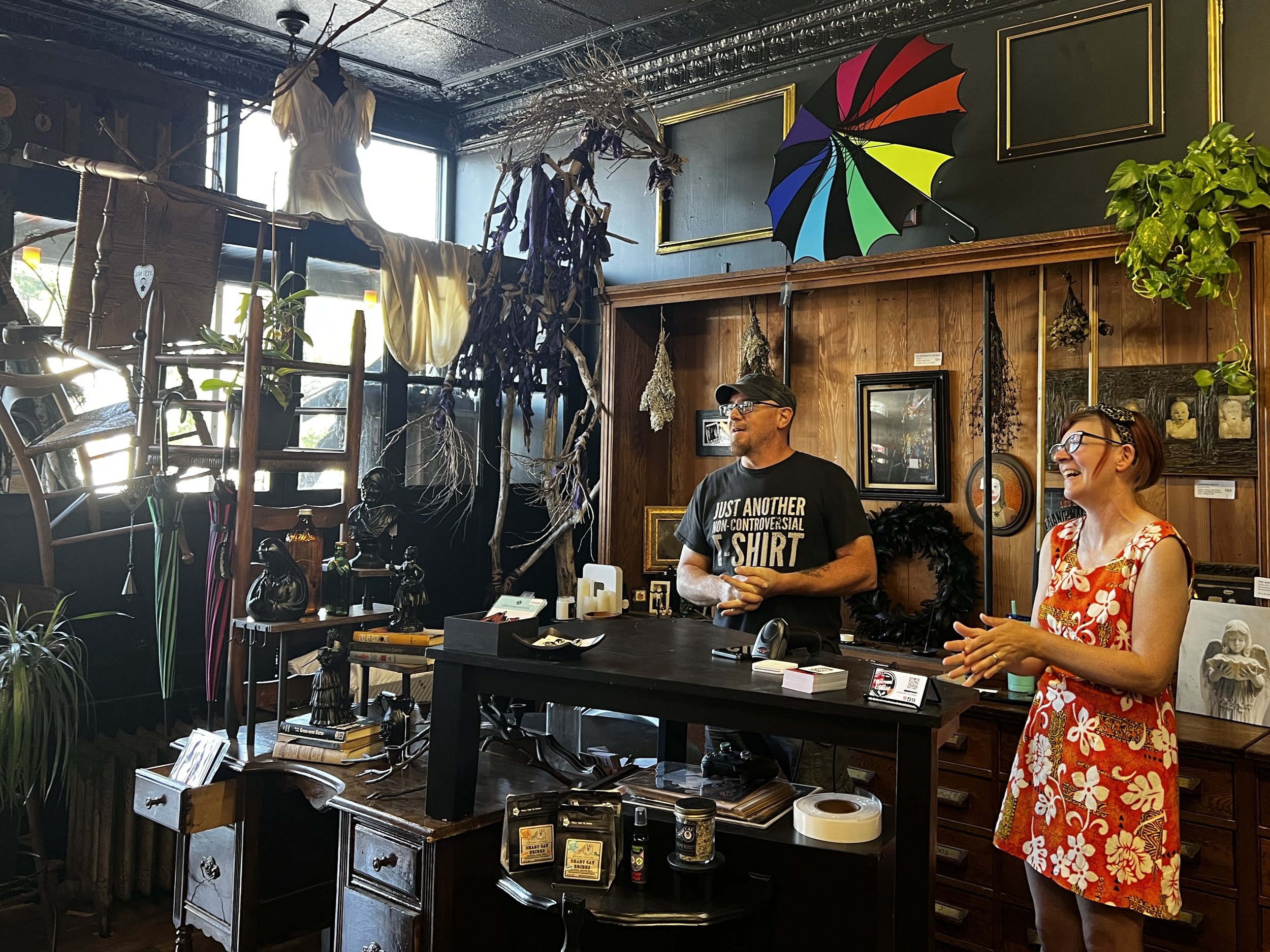
Miscreant & The Muse
Why one business gets funded and another doesn't
A few filters narrow the field before anything is even scored:
Address — inside one of the six eligible neighborhoods, and inside the City of Cleveland (the business, not necessarily the owner, has to be a city address)
Type of business — retail-based; home-based businesses and purely residential projects don't qualify, though mixed-use buildings can
Skin in the game — the 10 percent equity requirement
Clean building record — outstanding code violations should be resolved first
What's left in the pool — awards depend on how much money remains in that neighborhood's balance that round; some rounds may not fund anything in a given neighborhood
Readiness — a defined scope, real budget and contractor quotes beat an idea that isn't fully worked out yet
A business can apply more than once but win only one award and can reapply in a later round if turned down. This is also a finite fund, it isn't refilled by a levy or annual budget line. It draws down as it's spent.
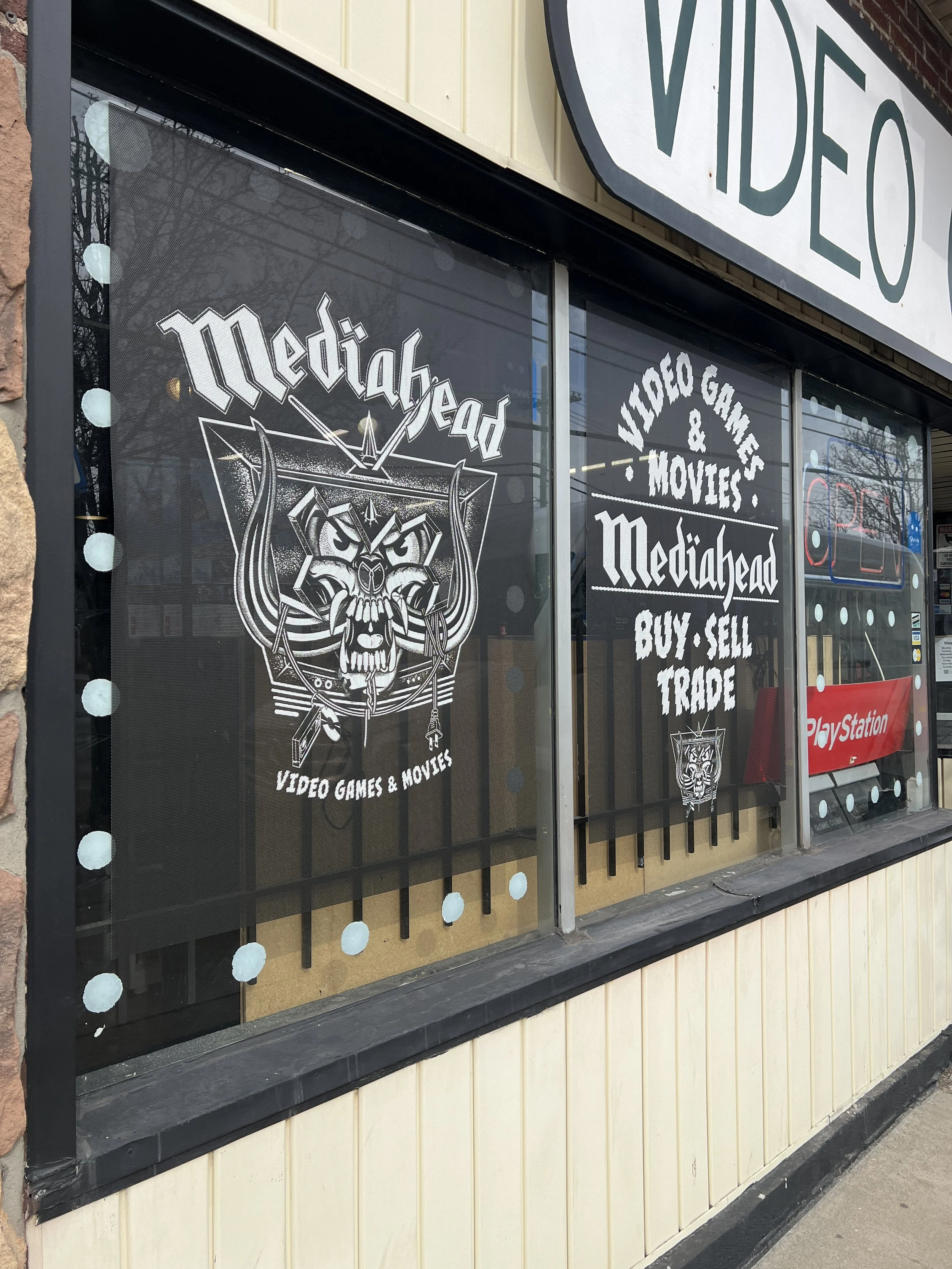
Mediahead
What Old Brooklyn has received
Since the program relaunched, 14 Old Brooklyn small businesses have split $120,809.52, and Old Brooklyn CDC received a $100,000 placemaking grant for a pocket park and mural projects — about $220,800 total.
Here's what a few of those awards looked like on the ground: Never Say Dive (J Batty LLC) put its $10,000 toward an updated HVAC system. Slices Fabulous Pastries used its award for a new freezer. Presswork Graphics bought a new printing press to take on more one-off, business-to-consumer design work.
787 Market LLC - $10,000 toward furniture, fixtures and equipment; landscaping and bike racks; and exterior and interior improvements
Barberia Cache - $3,195 toward interior improvements and furniture, fixtures and equipment
Dahlia Coffee Company LLC - $10,000 toward furniture, fixtures and equipment
From the Lobby LLC - $6,440.52 toward furniture, fixtures and equipment
Island Beats - $9,324 toward interior improvements and furniture, fixtures and equipment
J Batty LLC (Never Say Dive) - $10,000 toward an updated HVAC system
Mediahead LLC - $7,650 toward signage, exterior lighting, and exterior and interior improvements
More Everything LLC (The Miscreant and the Muse) - $9,800 toward interior improvements and furniture, fixtures and equipment
Operation Lean on Me (Hearts & Hangers) - $10,000 toward furniture, fixtures and equipment; exterior lighting; exterior and interior improvements; landscaping and bike racks; and IT installation
Presswork Graphics LLC - $10,000 toward a new printing press for one-off, B2C design work
Sabor Miami Cafe LLC - $9,000 toward furniture, fixtures and equipment; exterior lighting; exterior and interior improvements; landscaping and bike racks; and IT installation
Shag Vintage LLC - $5,400 toward exterior and interior improvements, furniture, fixtures and equipment, and signage
Slices Fabulous Pastries LLC - $10,000 toward a new freezer
Stranci Tattoo & Piercing LLC - $10,000 toward furniture, fixtures and equipment; exterior and interior improvements; public art; and landscaping and bike racks
And on the placemaking side:
Old Brooklyn CDC - $100,000 placemaking grant toward a pocket park and mural projects
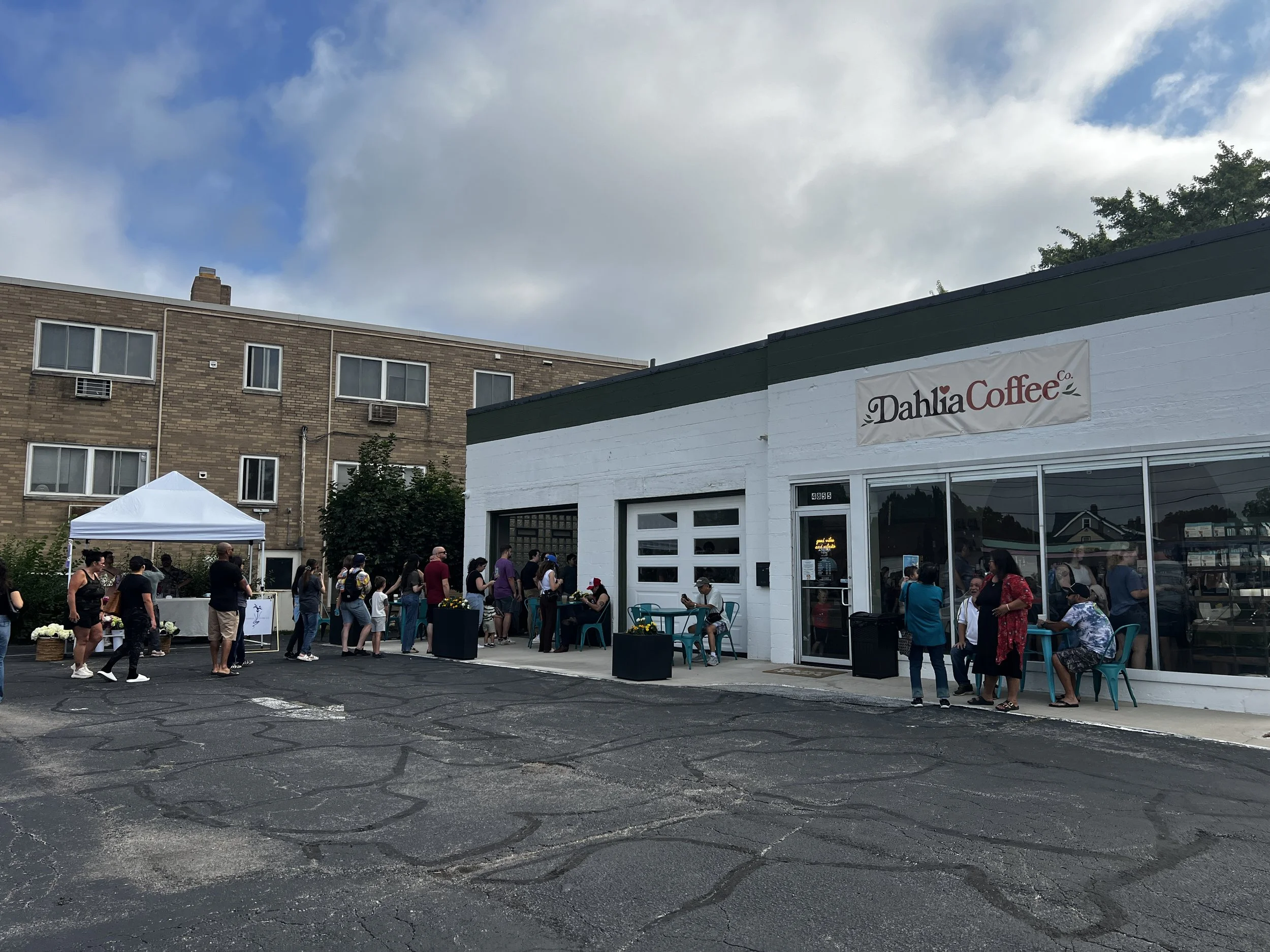
Dahlia Coffee (Old Brooklyn)
Why isn't there one of these for other neighborhoods?
Cleveland has a lot of TIFs, but almost none of them work like Steelyard's. A typical TIF, like Flats East Bank, the Sherwin-Williams headquarters, the Bedrock riverfront project, captures new property value from a single development and spends it on infrastructure tied to that development, plus debt payments. No grants, no applications. Steelyard is unusual because City Council carved out a share for the neighborhoods a study found were harmed by it.
The one to watch is Shore-to-Core-to-Shore, a downtown/near-west-side district Council created in 2024. Most of its projected billions in revenue is earmarked for downtown infrastructure and debt service, but the City agreed up to 35 percent of what's left could fund parks and infrastructure in neighborhoods citywide. That's the likeliest route for TIF money to reach neighborhoods outside the Steelyard six, though it's aimed at public infrastructure, not grants to individual businesses.
If you own a business here
If you have a project in mind like a new sign, a facade repair, or equipment you've been putting off, it's worth a conversation before the next round opens. Reach out to Old Brooklyn CDC's economic development team and we can help you put together a competitive application.
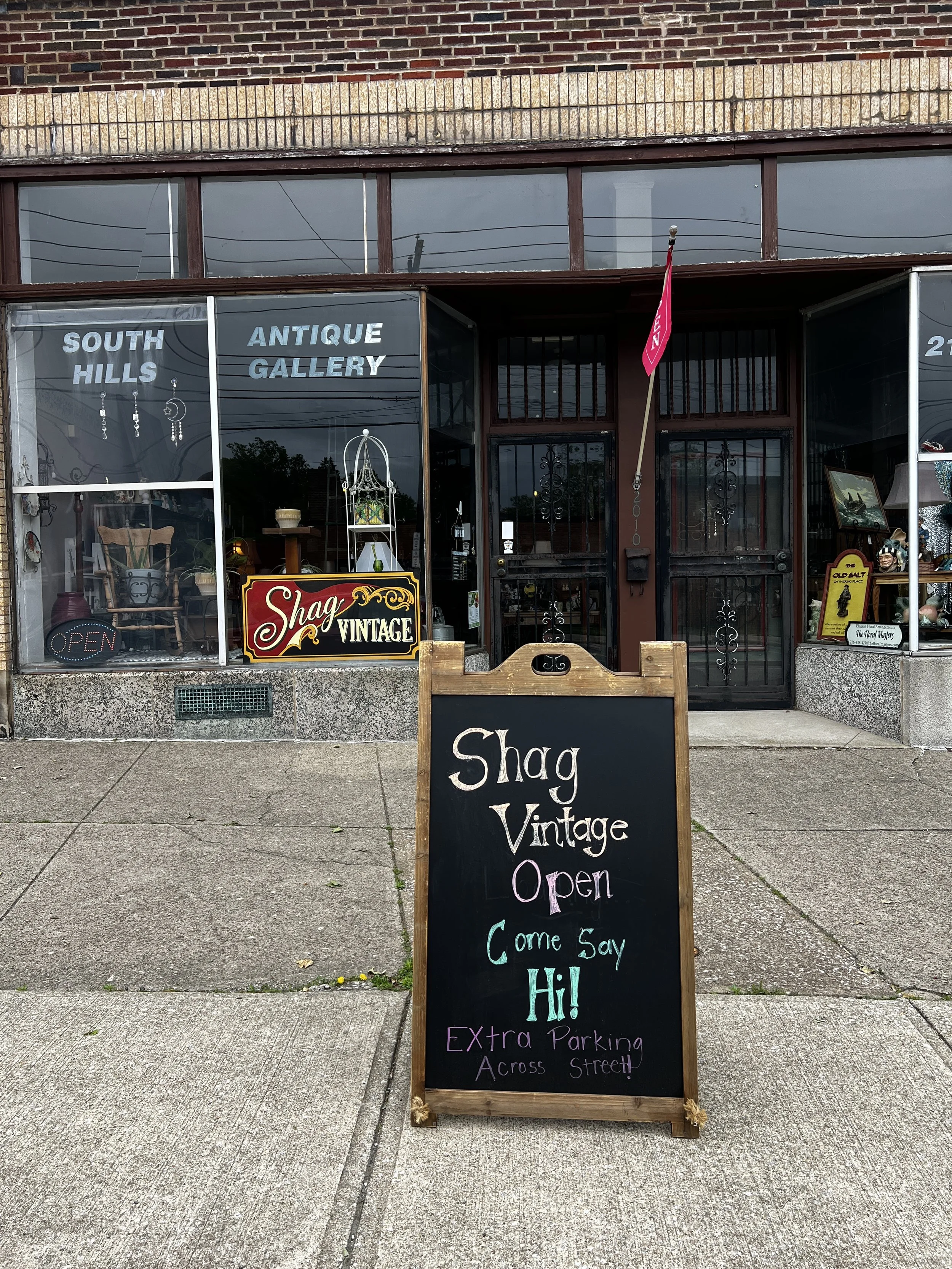
Shag Vintage
Sources: City of Cleveland Department of Economic Development program page and 2026 program FAQ; Cleveland City Council Ordinances 1780-05 (2006) and 766-11 (2011); "Big Box Centers and Neighborhood Business Districts: Impact Analysis and Competitive Strategy," MJB Consulting, November 2006; City of Cleveland award announcements; Signal Cleveland and Ideastream Public Media reporting on Cleveland's TIF districts.